


The illusion of Post-Apartheid South Africa; a Pan-Africanist Black Power analysis.

[Azania Rising]
Three decades since the official demise of apartheid, South Africa remains wedded to a system where political freedom conceals enduring economic servitude. The democratic turning point of 1994 celebrated globally as giving birth to the “Rainbow Nation” promised liberation—but delivered an orchestrated compromise. From the Pan-African and Black Power point of view, this accommodation did not eradicate apartheid; it merely rebranded it. White capital remained entrenched, land dispossession remained unreversed, and the apartheid economy persisted under the new Black leadership.
The Mirage of Liberation
The negotiated settlement between the apartheid state and the African National Congress (ANC) was designed to save economic interests, not to eliminate them. Instead of restructuring society according to justice and redistribution, it sought stability—above all, for capital. Land was not returned to the robbed Africans. Mines, banks, and infrastructure remained in private ownership and foreign hands. South Africa was a neo-colonialism case study: Black faces in power, white hands on the economy.
Black Economic Empowerment (BEE) created a comprador elite—a small, interdependent class that benefited at the expense of the majority. This illusion of participation has generated disillusionment, especially among youths who witness the irony: a Black-led state that enforces white prosperity.
Democratic Socialism and African Communalism: The Missing Link
What the liberation movement did not strive to emulate—either by design or compromise—was a model of government founded in both African heritage and economic justice. But there is such a model.
Precolonial African societies were, in a number of respects, socialist in character: common ownership of land, collective child-rearing, custodians of group knowledge being elders, and wealth as a social good rather than as individual gain. The Zulu philosophy of ubuntu—”I am because we are” captures this spirit. There was agreement in making decisions; wealth was distributed; no one ate while others starved.
This spirit is strikingly close to that of democratic socialism, particularly as manifested in Scandinavian countries like Sweden, Norway, and Denmark. They have strong social safety nets, universal healthcare, free education, low inequality, and high civic trust—not through communism, but through policies that prioritize human well-being over market interests.
The irony is poignant: Europe has succeeded in using communal values that African societies formerly held, whereas African post-colonial regimes have a propensity to adopt hyper-capitalist solutions that disown their own cultural and historical foundations.
Learning from Scandinavia Without Losing Ourselves
South Africa doesn’t need to emulate Scandinavian solutions lock, stock, and barrel—but can borrow their good practices:
- Universal basic services: Free health care, education, housing, and transport are achievable through political will and progressive taxation.
- Worker cooperatives: Reversion to shared ownership can be in the guise of worker-owned businesses, grounded in traditional models of shared work and collective benefit.
- Participatory governance: Participatory budgeting at the municipal level and village-level decision-making can re-place the people at the center of local democracy.
- Land reform and stewardship: Land should be held in trust for common use, rather than commodified ownership—reversing precolonial tenure systems and sustainable use.
This is not utopian dreaming but a practical call for an Afro-socialist society honoring African traditions but employing the methods of modern administration.
Pan-Africanism as the Framework for Renewal
A new vision for South Africa must be part of a larger Pan-Africanist project—a continental one towards unity, sovereignty, and African-led development. Fragmentation of the continent is a colonial legacy that undermines economic independence and cultural pride. An Africa united, economically integrated and politically self-determined alone can face the world structures of exploitation.
Pan-Africanism, unlike narrow nationalism, provides a framework to:
- Pool resources and bargain as a bloc on the international plane
- Reclaim control over natural wealth from global capital
- Foster cultural pride and resist Eurocentric values
The Struggle Continues, but So Does the Dream
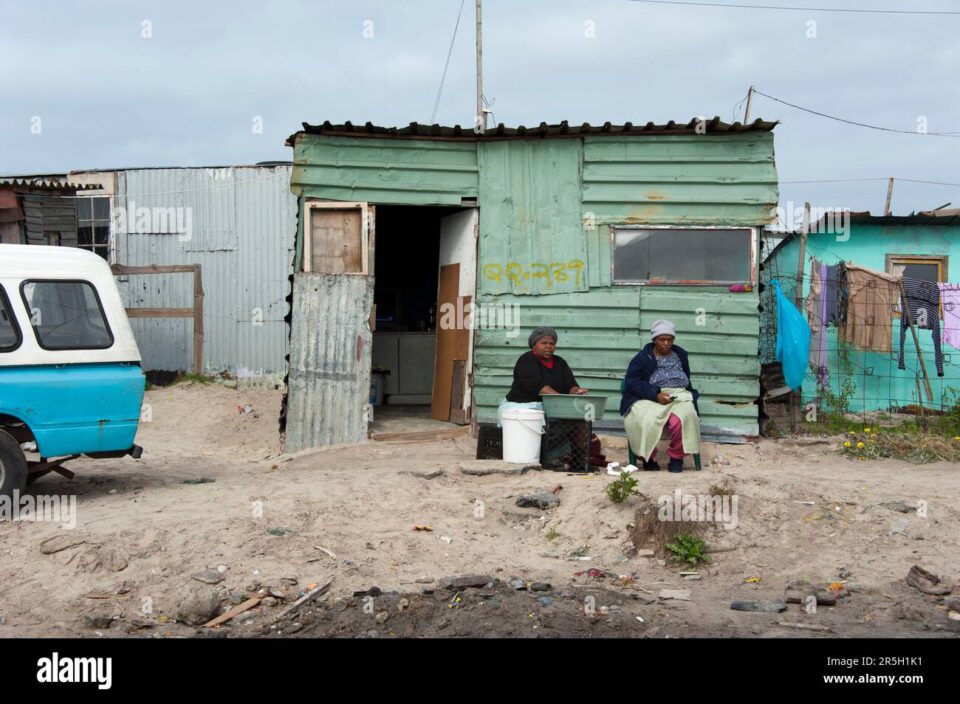
South Africa’s post-apartheid reality is not the end of struggle—it is its continuation under a new guise. The “Rainbow Nation” myth soothes the international elite, but it belittles the lived experience of millions in Khayelitsha, Mdantsane, and Tembisa. What’s required is not mere cosmetic reform but revolutionary reconstruction—based on Pan-Africanist Black Power and informed by the humane logic of African communalism and democratic socialism.
By combining our age-old wisdom with proven modern systems of equitable government, South Africa can not only free itself—but help the rest of Africa break out of the neo-colonial trap. The fantasy must be broken, but in its place, we can forge a reality more beautiful than even the dream.
